

Sciatica in Charleston, IL
Sciatica can make a short walk, a car ride, or a full night of sleep feel unpredictable. The discomfort often follows a recognizable path from the low back or buttock into one leg, but the intensity and exact location can vary. Some people describe burning or electric pain. Others notice tingling, numbness, or weakness. At Back to Health in Charleston, Illinois, Dr. Charles Schuster begins by identifying what may be irritating the nerve and how the symptoms are changing everyday function.
Sciatica Symptoms and Nerve Problems We Evaluate
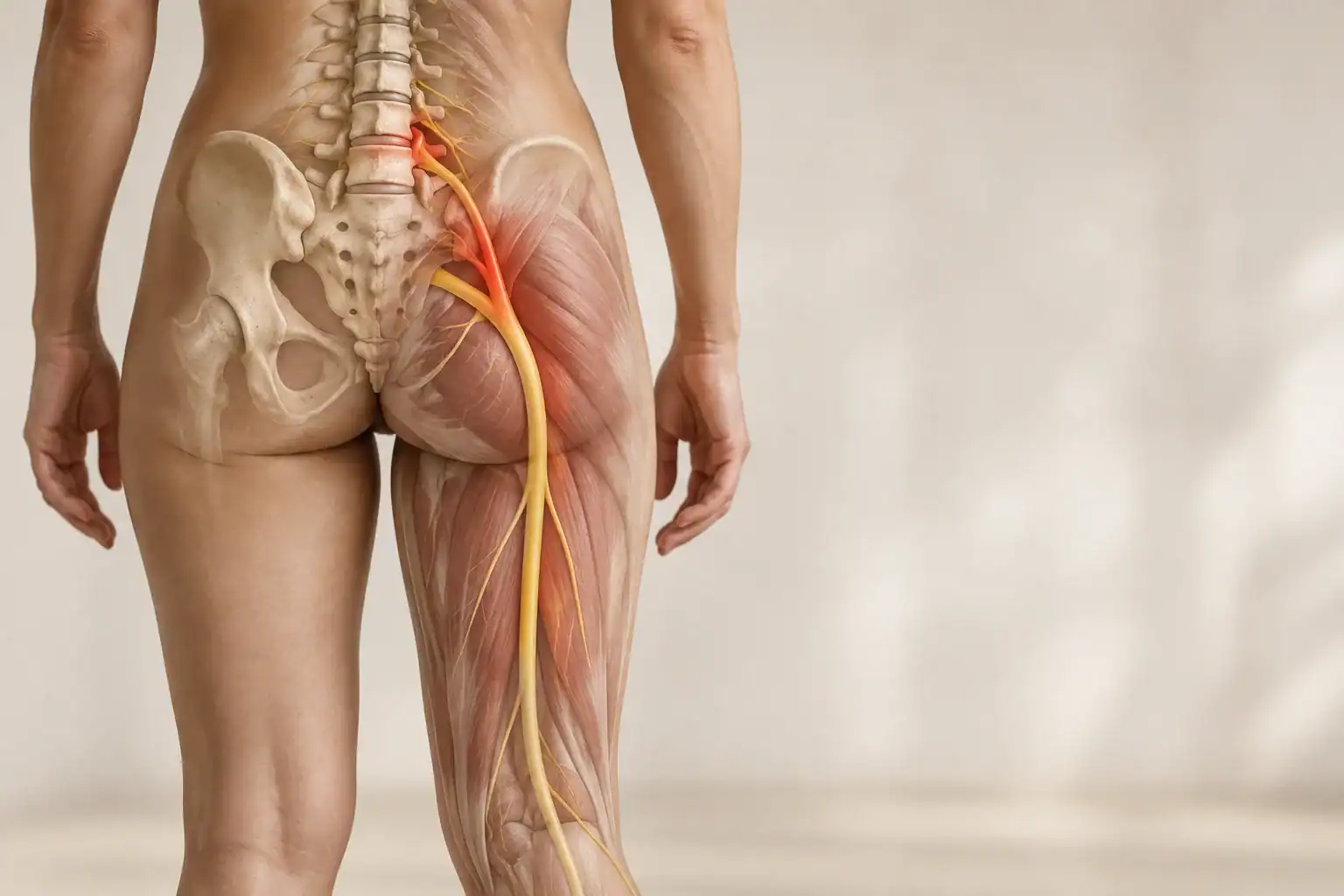 Sciatica can affect more than the low back. We evaluate where the symptoms travel, what positions aggravate them, and whether strength or sensation has changed.
Common reasons to schedule an evaluation include:
- A distinct pain path: discomfort running through one buttock, thigh, calf, or foot.
- Changing sensation: tingling, pins and needles, burning, or numbness.
- Position-related symptoms: pain that increases while sitting, bending, coughing, or driving.
- Loss of confidence: hesitation with walking, lifting, stairs, exercise, or work.
- One-sided weakness: difficulty pushing through the foot or controlling the leg.
Non-Surgical Sciatica Treatments for Nerve Relief
When conservative care is appropriate, treatment may focus on reducing mechanical irritation while helping your body tolerate normal movement again. The combination depends on the examination and the likely source of the symptoms.
• Non-Surgical Spinal Decompression
Non-surgical spinal decompression may be considered for selected disc-related presentations when changing pressure around irritated spinal structures fits the findings.
• Targeted Chiropractic Care
Targeted chiropractic care may help address restricted spinal or pelvic motion. Soft-tissue methods, progressive trunk and hip exercises, and practical guidance for sitting, lifting, sleep positions, and graded activity may support the same plan.
No single procedure is automatically right for sciatica. The chosen combination should match the likely source, your health history and comfort, and measurable changes during care.
A Personalized Sciatica Plan With RESTORE™
Our RESTORE™ Regenerative Spine Care framework considers both the mechanical environment around the spine and biological factors that may affect tissue health and recovery. For one patient, the central issue may be disc pressure and reduced movement. For another, deconditioning, inflammation, joint stress, or several overlapping factors may matter.
RESTORE™ helps us organize the evaluation, recommendations, and checkpoints. We look for leg symptoms that travel a shorter distance, easier movement, improving strength, and fewer limits during daily activities. If progress does not match expectations, the next step can be adjusted.
How We Trace Radiating Leg Symptoms Back to Their Source
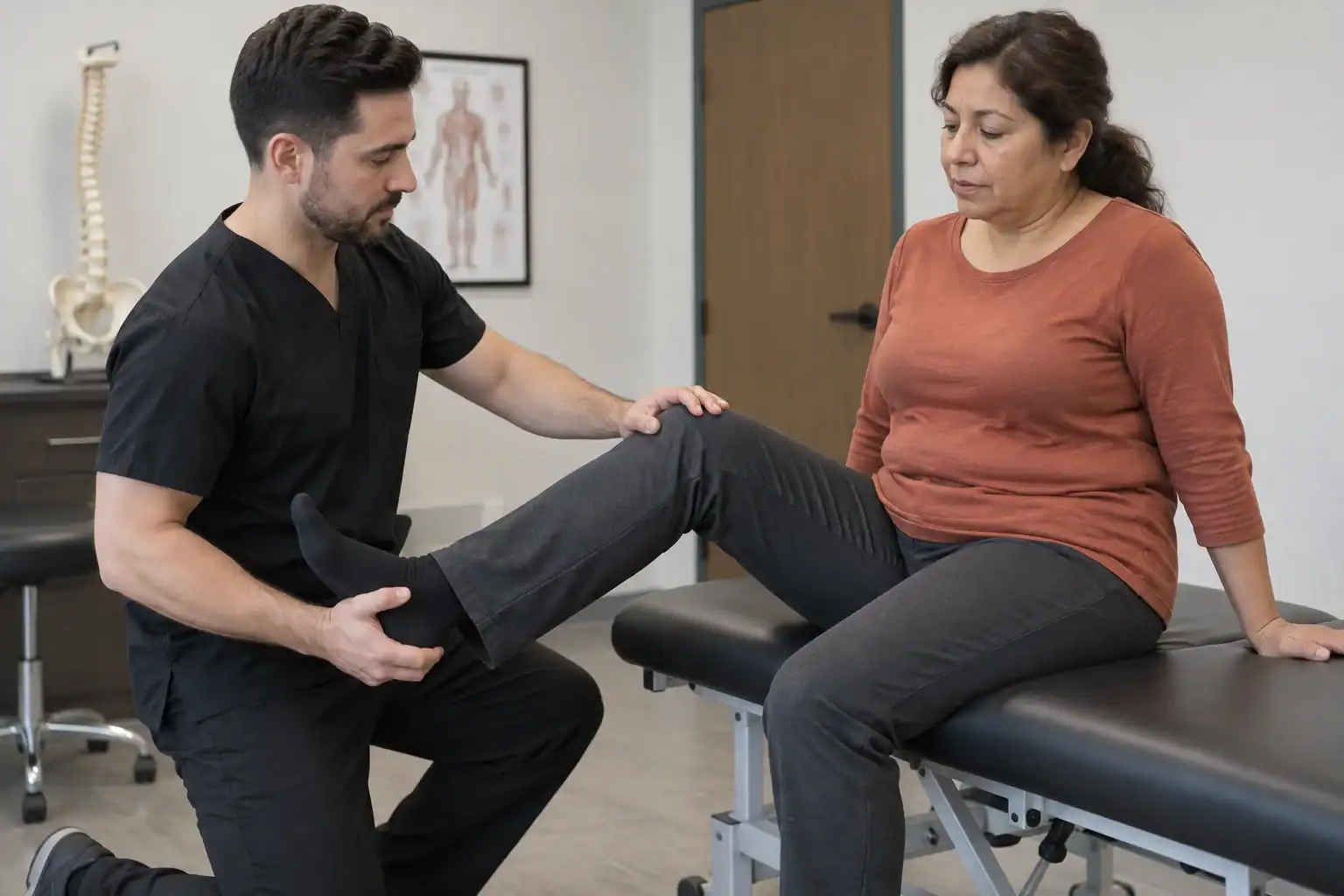 Dr. Schuster reviews when the symptoms began, where they travel, which positions affect them, and whether strength or sensation has changed. The examination may include lumbar and hip movement, posture, reflexes, muscle strength, sensation, and appropriate nerve-tension or orthopedic testing. The goal is to connect what you feel with objective findings rather than treating every case of radiating pain the same way.
New bowel or bladder changes, numbness around the groin or saddle area, rapidly worsening weakness, fever, major trauma, or severe unexplained pain should be evaluated promptly. When imaging, medical testing, or another specialist is appropriate, a responsible plan includes that referral.
Why Sciatica Can Flare or Travel Down the Leg
Sciatica describes symptoms associated with irritation or compression of the sciatic nerve or the nerve roots that form it. Those nerves travel from the lower spine through the buttock and leg, so the problem may be felt far from its source. A bulging or herniated disc, age-related disc changes, narrowed space around a nerve, joint dysfunction, or inflammation may contribute. Muscle and movement problems can also influence how much stress reaches the area.
The name “sciatica” does not identify the exact cause. That distinction matters because two people with similar leg pain may need different recommendations.
Getting Back to Walking, Sitting, and Sleeping More Comfortably
 A lower pain score can be encouraging, but meaningful improvement is broader. Depending on the cause and response to care, you may work toward sitting through a commute, walking farther, sleeping with fewer interruptions, lifting with better control, or returning to recreation without constantly monitoring the leg.
Useful signs of progress may include:
- Symptoms traveling a shorter distance down the leg.
- More comfortable transitions from sitting to standing.
- Improved leg strength, balance, or walking tolerance.
- Greater confidence with work and household tasks.
- A clear strategy for responding to temporary flare-ups.
Results vary with the diagnosis, severity, duration, overall health, and individual response.
Find Out What Is Causing Your Sciatica
If pain, tingling, numbness, or weakness is traveling from your back or hip into one leg, begin with an examination that looks beyond the label. Schedule an evaluation with Dr. Schuster to discuss whether conservative care, the RESTORE™ approach, diagnostic testing, or medical referral is the appropriate next step.
Schedule a Sciatica Evaluation or call 217-345-9600 to speak with the Back to Health team.